
The Last Harissa Maker of Srinagar: A 24-Hour Traditional Winter Ritual
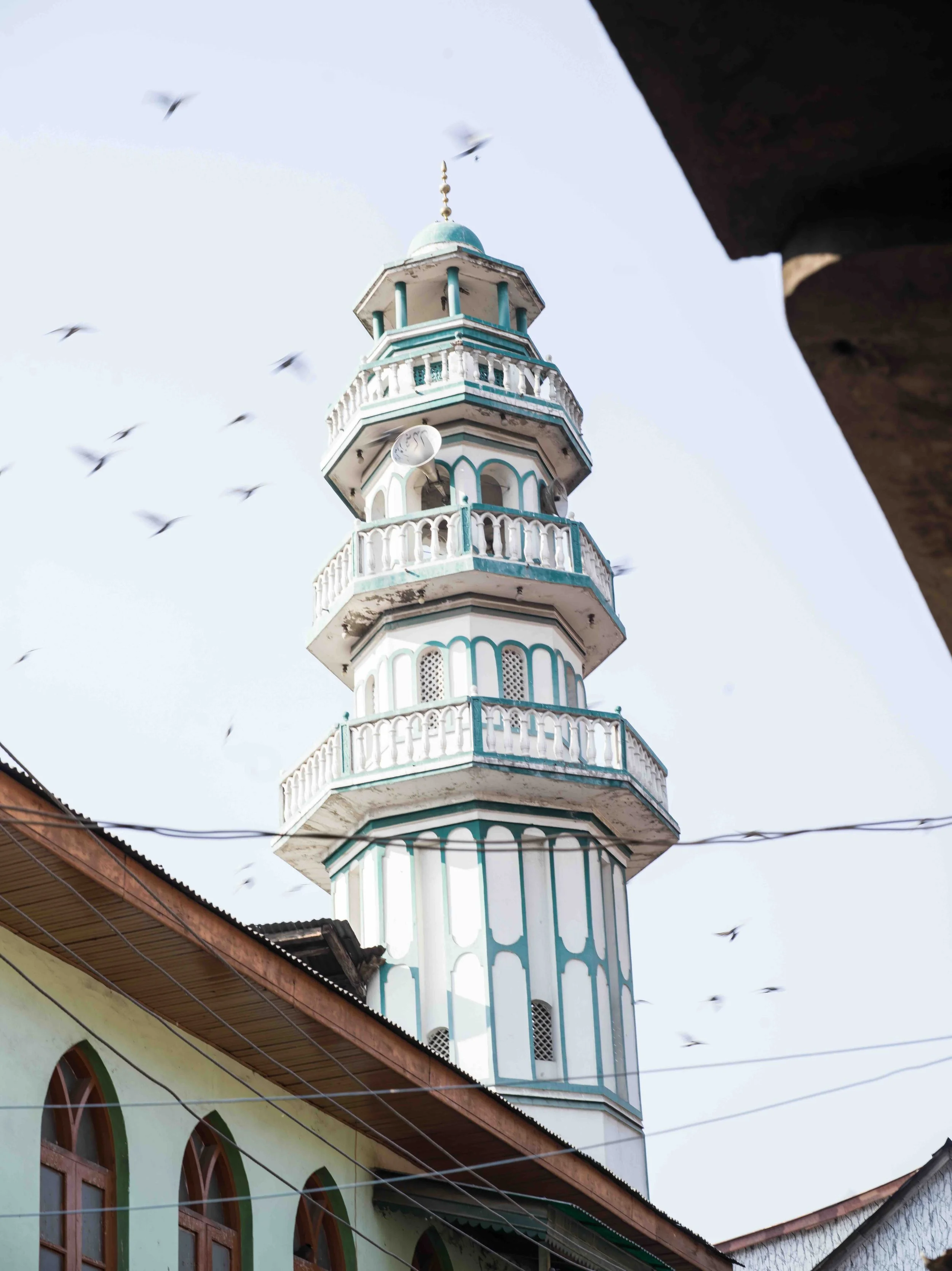
Addresses Barely Work in Srinagar Old Town
Use this photo of the minaret as your compass to locate Ashraf’s shop
By chance, I found Muhammad Ashraf Bhat.
I was wandering through the old town of Srinagar, searching for a metalsmith, when three men sitting outside a small shop caught my eye. I lifted my camera instinctively. Only after did I notice the smoke, thick, slow, and deliberate, rising from behind them.
Inside the shop, a man stood half-submerged into the floor, his upper body visible while the rest disappeared into a shallow pit from which the smoke emerged. It took a few seconds to register what I was seeing. He was cooking. Beneath him, two giant earthen pots sat sealed over a wood-fired oven. Through broken English and unreliable Google Translate, I was asked to return early the next morning. There was nothing more to see today, he said.
It was around 4 p.m. I pinned the location, took a few photographs, and left with a quiet urgency to return.
Navigating Srinagar’s old town is an exercise in humility. Our guesthouse driver, Muneer (+919596030390) unfailingly kind and dependable, drove a car too large for the narrow lanes so it was impossible to depend on for old town exploration. That night, I arranged an e-rickshaw instead. The next morning, even with a pinned map, the driver struggled to find the shop along Zaina Kadal Road. A photograph of a nearby minaret became our compass. In the old town, images travel further than coordinates.
By the time we finally found the shop next day, it was 10 a.m. The smoke had mostly settled. In its place were piles of raw mutton and measured heaps of spices lining the walls. The driver spoke some English, and through him, the story finally emerged.
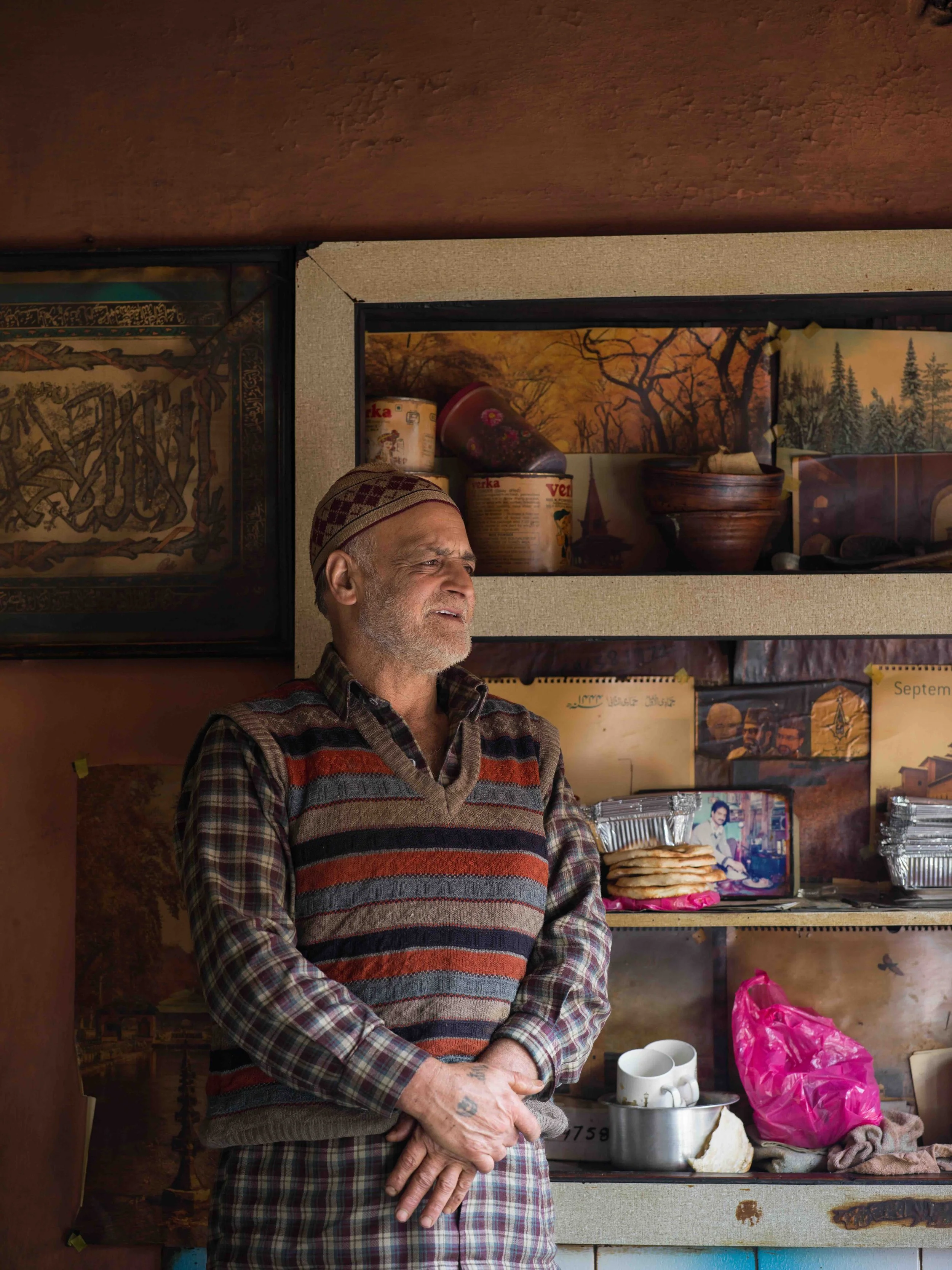
“Patience has become rare. No one will stepping forward to inherit this traditional way of cooking harissa. Not even my own family.”
Time stamps of traditional harissa-making
Day 1
11 a.m. – Cutting and cleaning the mutton
12–1 p.m. – Frying aromatics (shallots, spices), making kebabs
2 p.m. – Preparing the fire for the meat and rice stew
3–8 p.m. – Seasoning, cooking, stirring, and monitoring the stew
8 p.m. – Shop closes
Day 2
4 a.m. – Scooping bones out of the stew
5–7 a.m. – Mixing and pounding the stew
7:30 a.m. – Opens for business
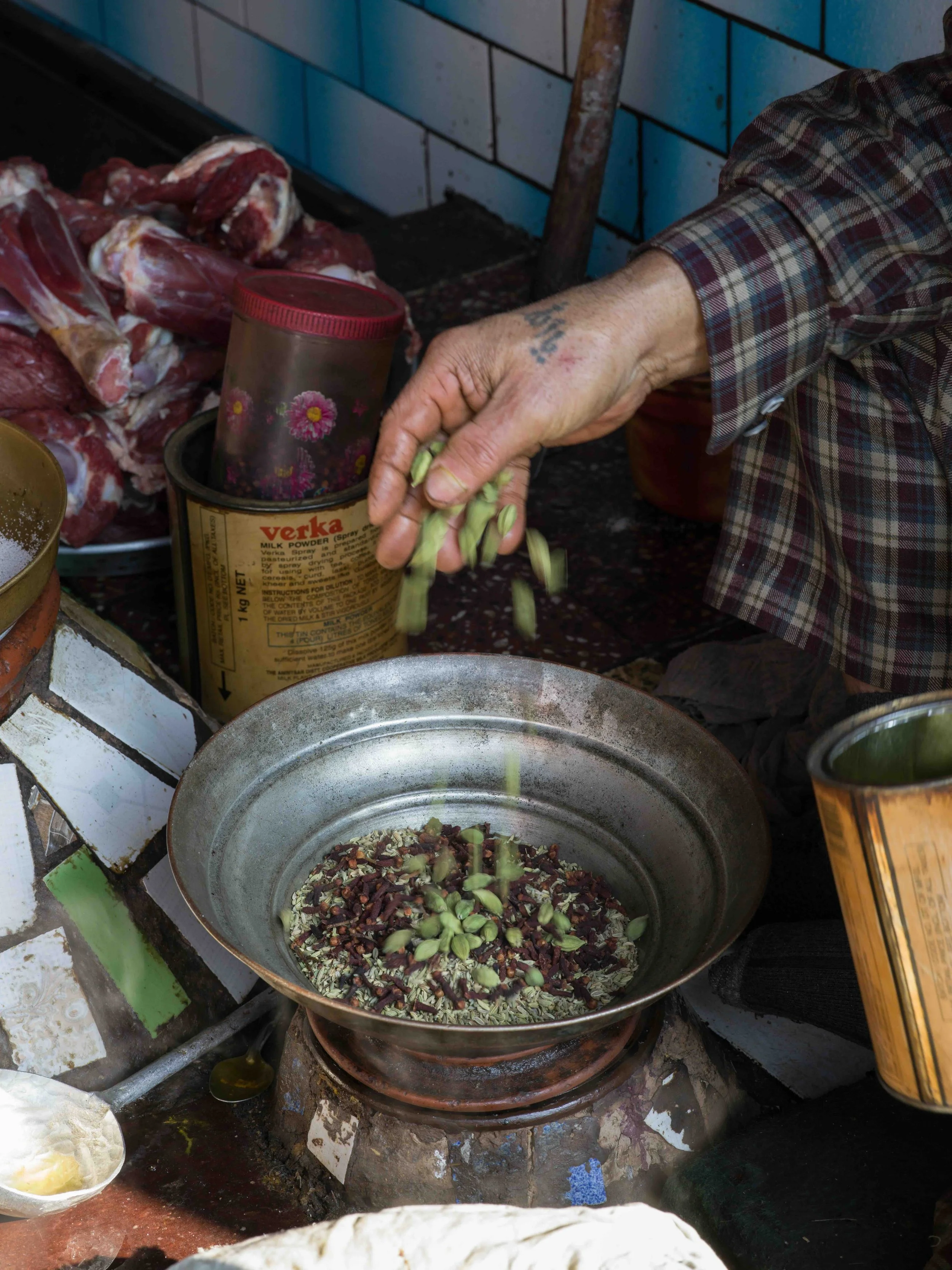
Ashraf Ji had tattoos on before tattoos were viewed as Haram in the late 1980s in Kashmir
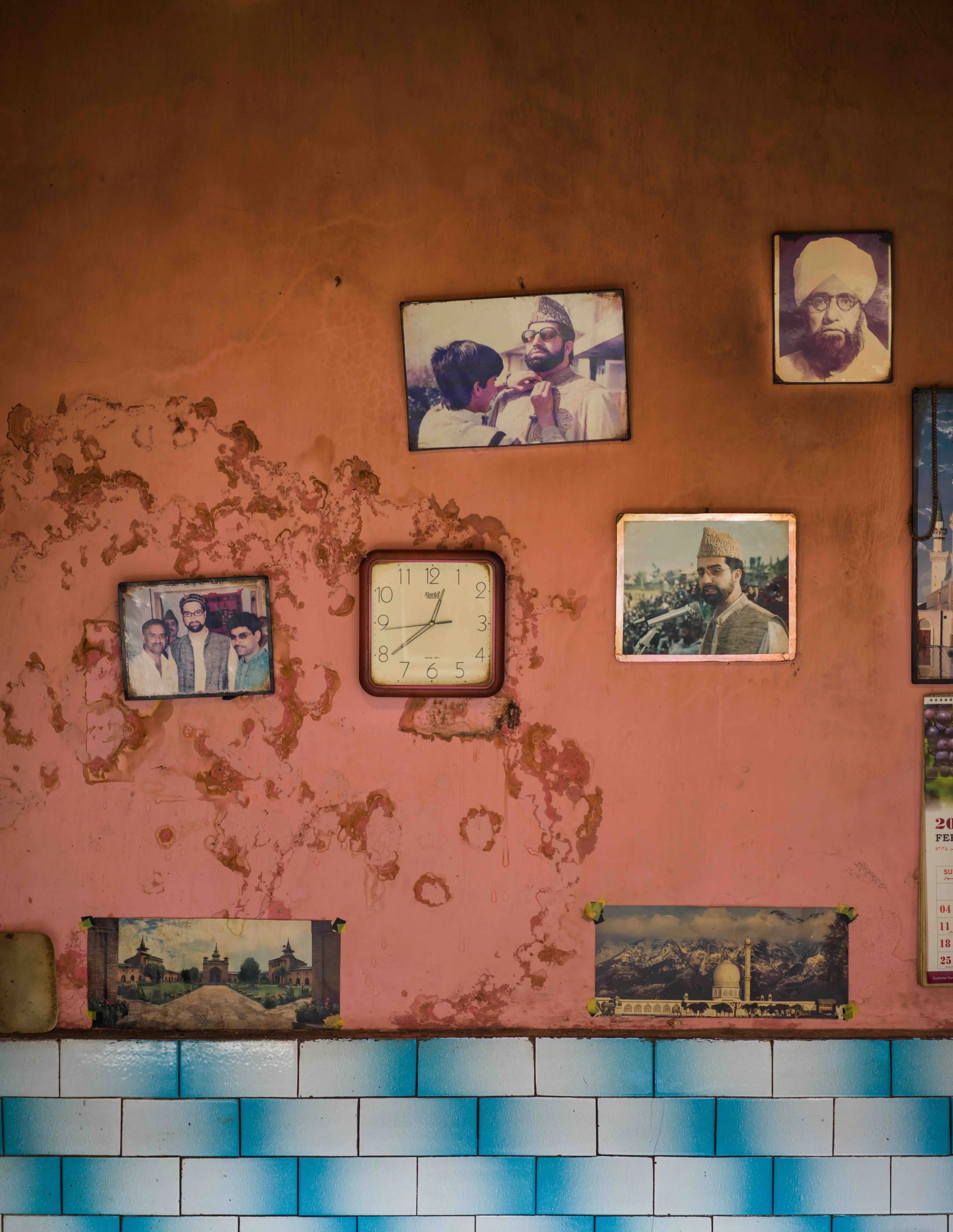
Old photographs of Ashraf’s father and grandfather on the wall
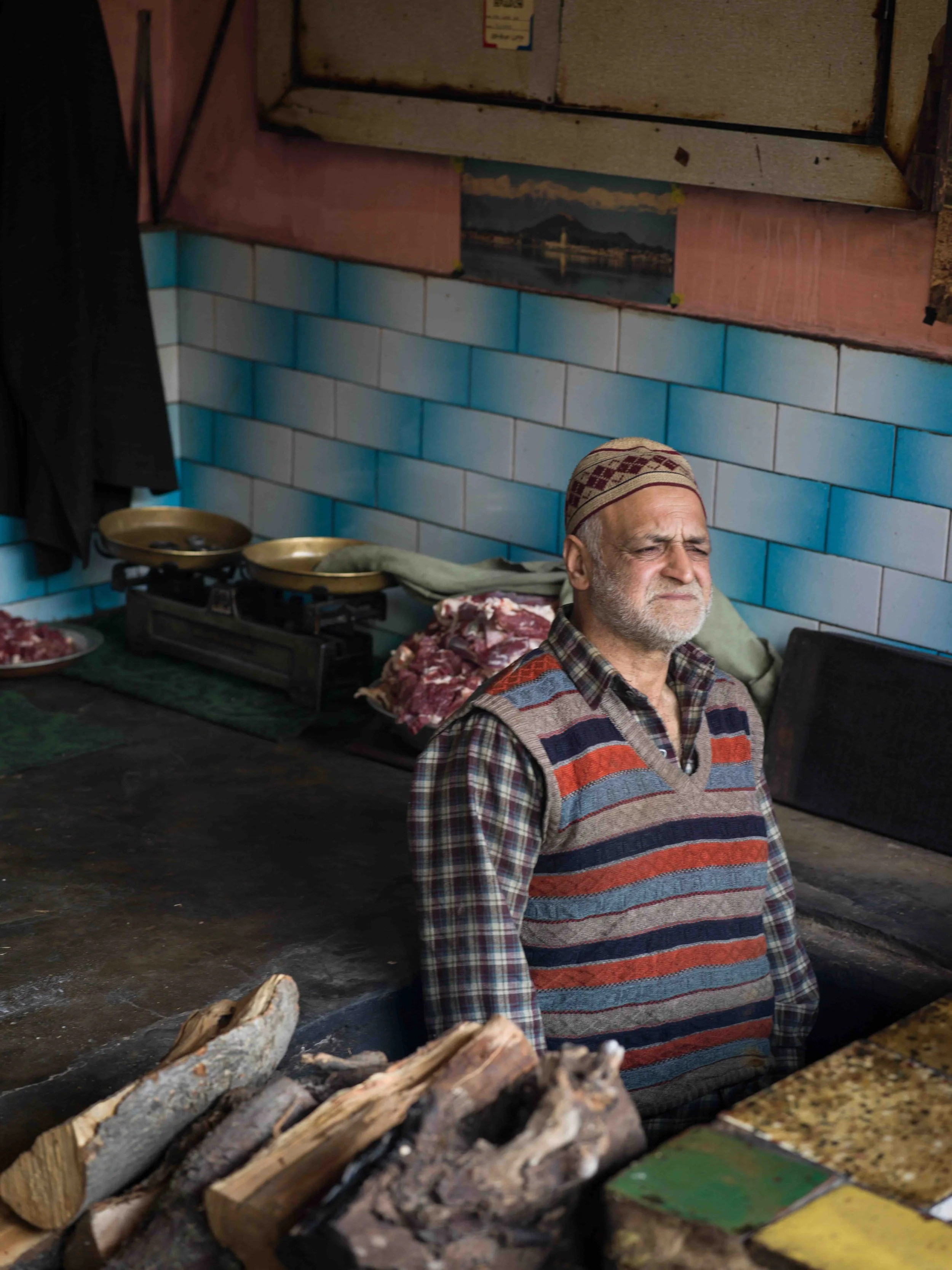
Muhammad Ashraf Bhat has been making the Kashmiri’s breakfast staple for the past 54 years.
Where I stood was the last shop in Srinagar still making harissa the traditional way.
Ashraf Ji is a third-generation harissa maker, and very possibly the last.
Harissa is a winter food. It belongs to Kashmir’s coldest months, prepared through the night and eaten at dawn to warm the lungs against the season. Its ingredients are deceptively simple: mutton, Kashmiri rice rich in starch, and whole spices (fennel seeds, cinnamon, cardamom). But harissa is defined not by its ingredients, rather by its discipline.
The proportions have not changed for centuries: 5 kilograms of mutton to 1 kilogram of rice.
Alter it, and the dish loses its balance. Ashraf prefers the leg cut. The rice is cooked until it collapses into a porridge-like state known locally as firni. The meat and grains are then stirred, mashed, and worked continuously for hours with a wooden spoon until they dissolve into a single, velvety paste.
From start to finish, Kashmiri harissa takes 24 hours.
To Kashmiris, harissa is breakfast. It is eaten with tchot or girda, torn by hand and used as a spoon. Ashraf Ji burns through nearly 200 kilograms of firewood each winter, sourced from the abundant local apple and walnut trees to meet the Winter morning demand.
While the stew simmers, kebabs are grilled on the side. The air inside the shop is thick with smoke and spice; my eyes watered constantly, irritated by both the fire and the dry winter air.
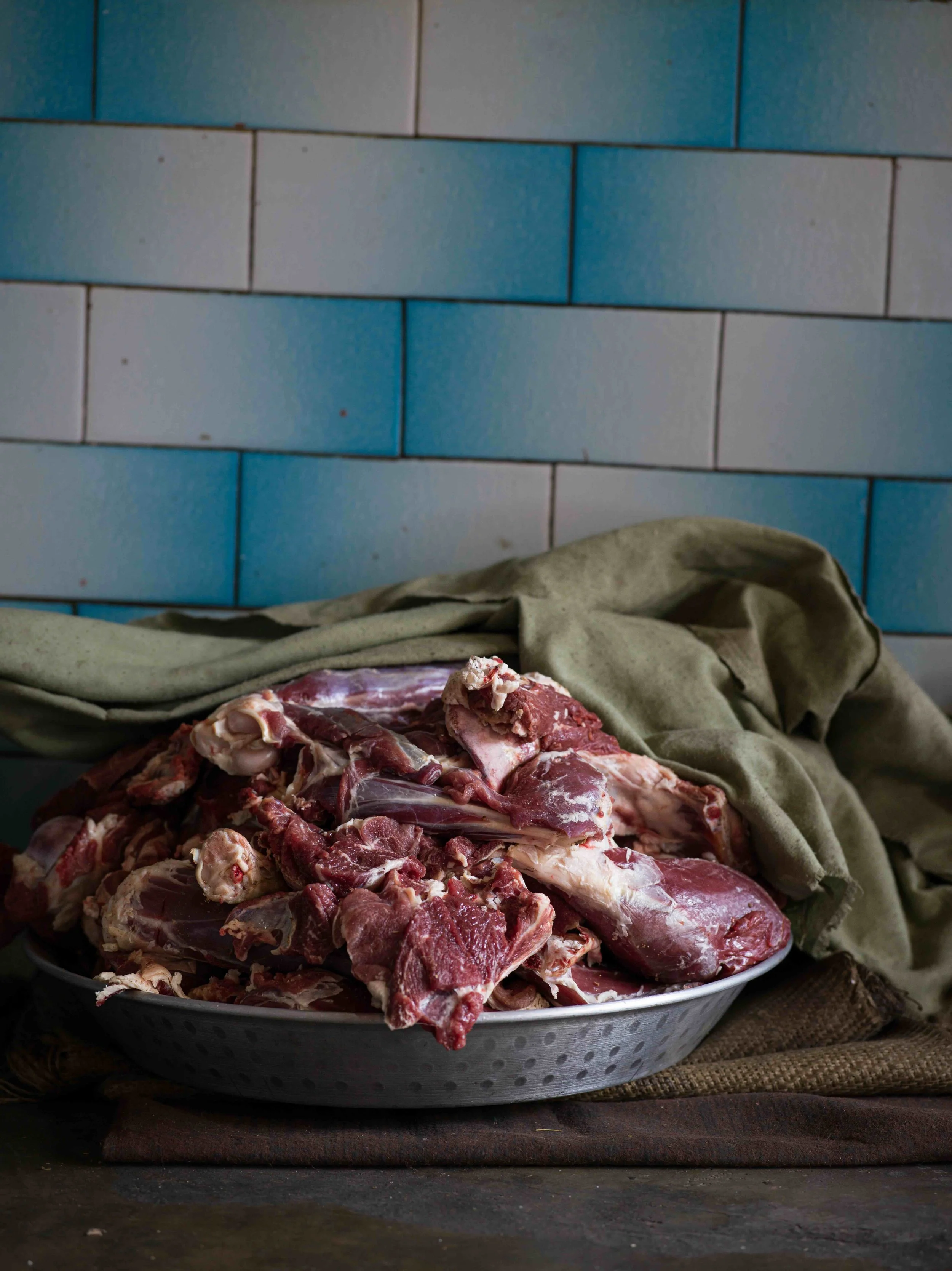
For every 5 kgs of mutton, 1 kg of rice Kashmiri rice is added into the recipe.
By my third visit, at 7 a.m. in the quiet morning, I finally got to taste this labour-intensive harissa. Ashraf had woken up at 3 a.m. to tend the fire, and by 4 a.m., he was removing all the bones from the stew using metal tongs.
Then came the most demanding part: two hours of mixing and pounding to achieve the right velvety consistency. We’re talking about 40–50 kg of meat and rice being mashed - just for one morning’s worth of harissa.
When it came time to eat, Ashraf Ji refused to take any money. Instead, he served my mother and me two metal plates of harissa, each accompanied by broken pieces of local bread. He did not use a ladle. Instead, he scooped the harissa with a cup carved from walnut wood, chosen for its resistance to heat. The surface glistened with hot mustard oil and fried shallots, the two final touches before serving.
He watched us eat with quiet pride.
It was a deeply moving meal. Ashraf Ji has spent the last 54 winters repeating this process, refining it through muscle memory rather than measurement. Around us, men of his generation began to fill the shop. Customers who have been coming every winter for decades, bound by a ritual very special to the old Srinagar.
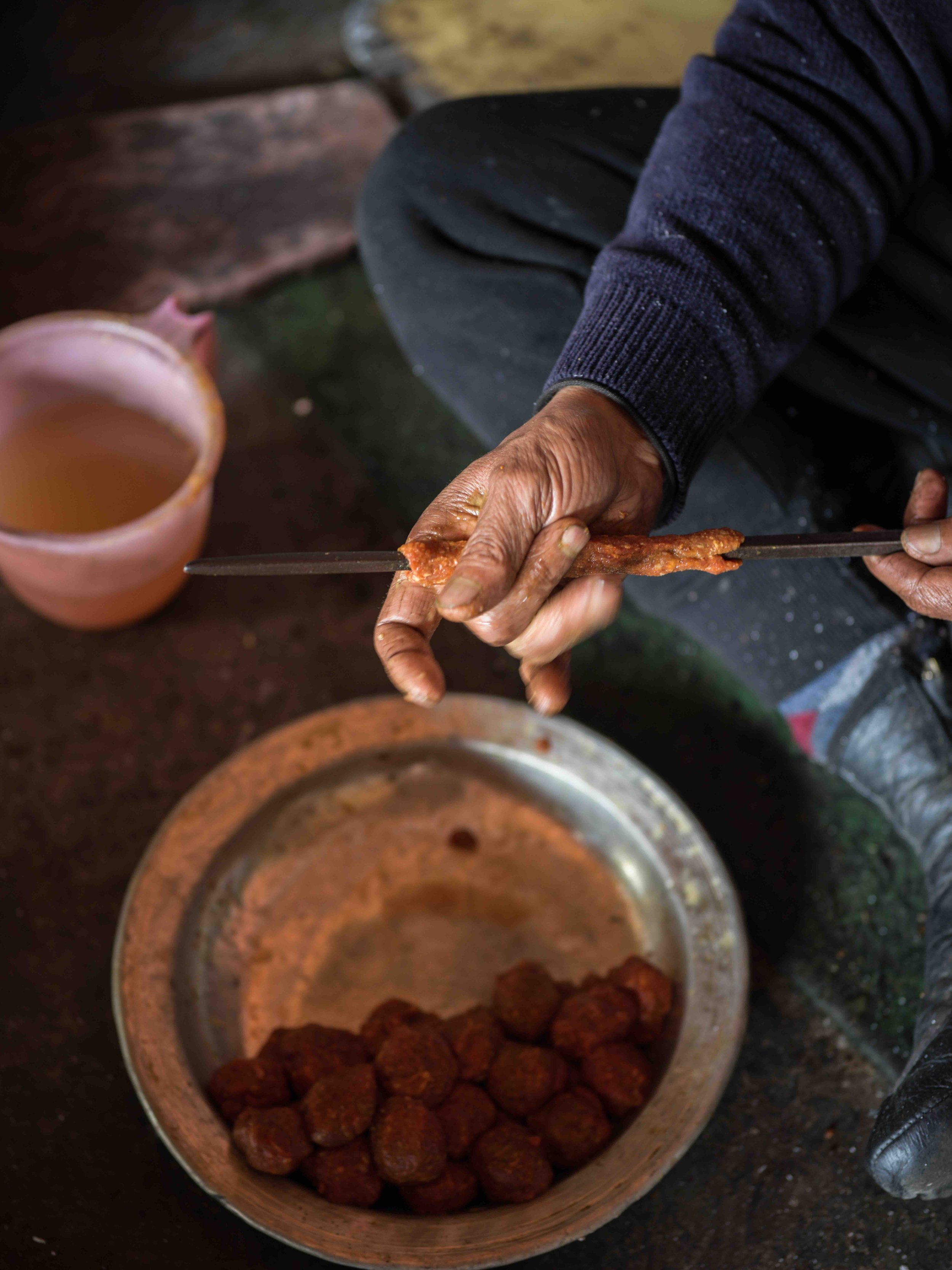
Kebab is served as a topping on harrissa.
That morning, I chose to observe rather than photograph. I still don’t know what got to me. It may be my greatest regret in Disappearing Cultures so far: the last of Ashraf Sahib’s Harissa, the photographs not taken. - Prestine
