
A Guide to Kuching's Bidayuh Villages: Homestay vs. Booked Village Stay
If you're planning a trip to a Bidayuh village near Kuching, you'll run into two very different ways of doing it. One is the homestay route - word of mouth, no listing, no itinerary, just a family willing to put you up for the night. The other is a proper booked village stay, complete with a host, a schedule, and reviews from strangers who did it before you. I did both, within a week of each other, and I'm laying out exactly what each one gets you.
Both stays were within 90 minutes of Kuching. Both put me with Bidayuh hosts, and both promised the thing every "village stay" promises - a warm welcome, home-cooked food, a look at a way of life that's fading everywhere else in Sarawak. But the homestay and the booked stay delivered on that promise in almost opposite ways, and if you're choosing between them, it's worth knowing what you're actually signing up for.
Stop One: Kampung Benuk, and a Host Named Derai
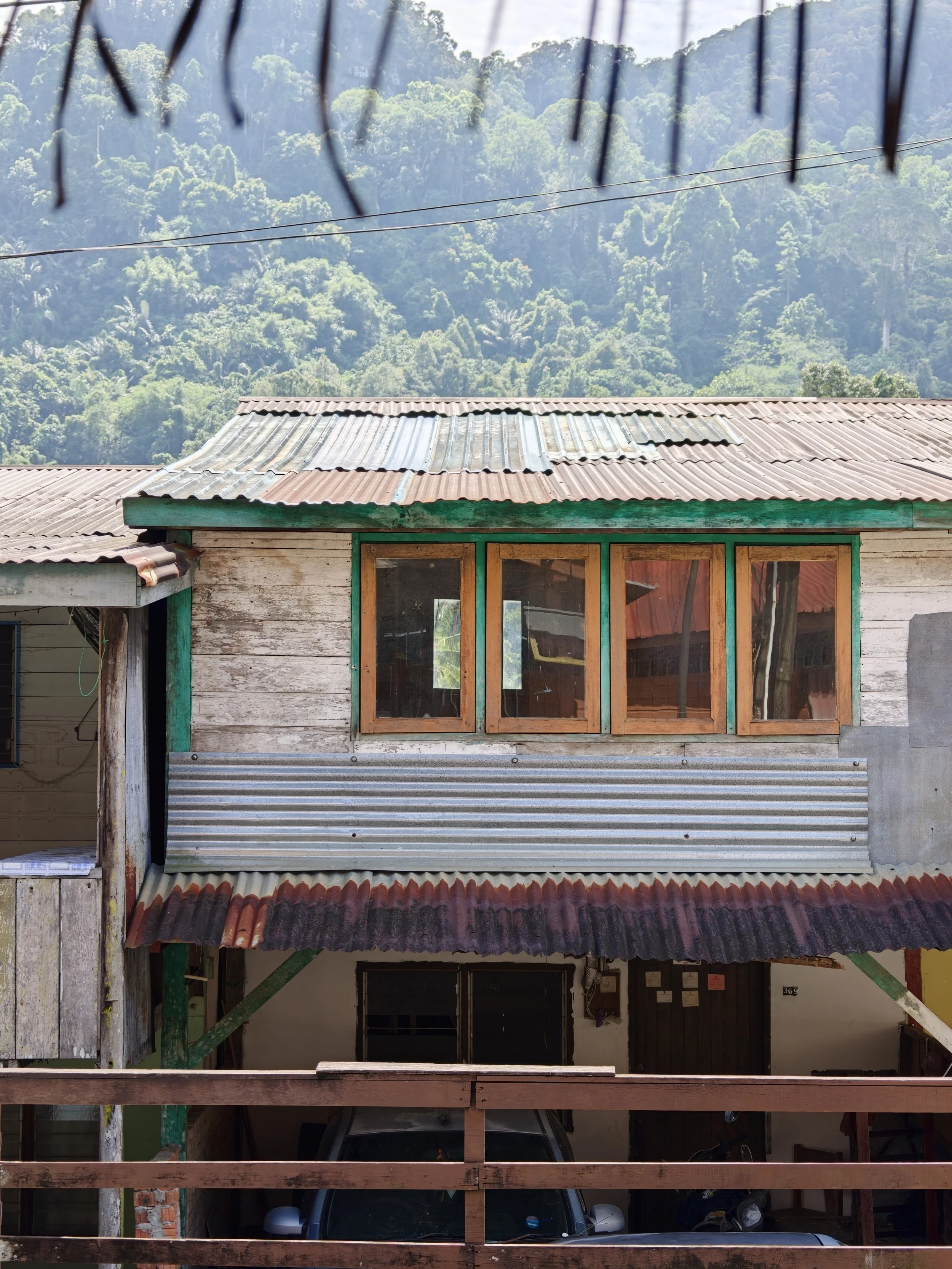
View from Derai’s house in Kampung Benuk
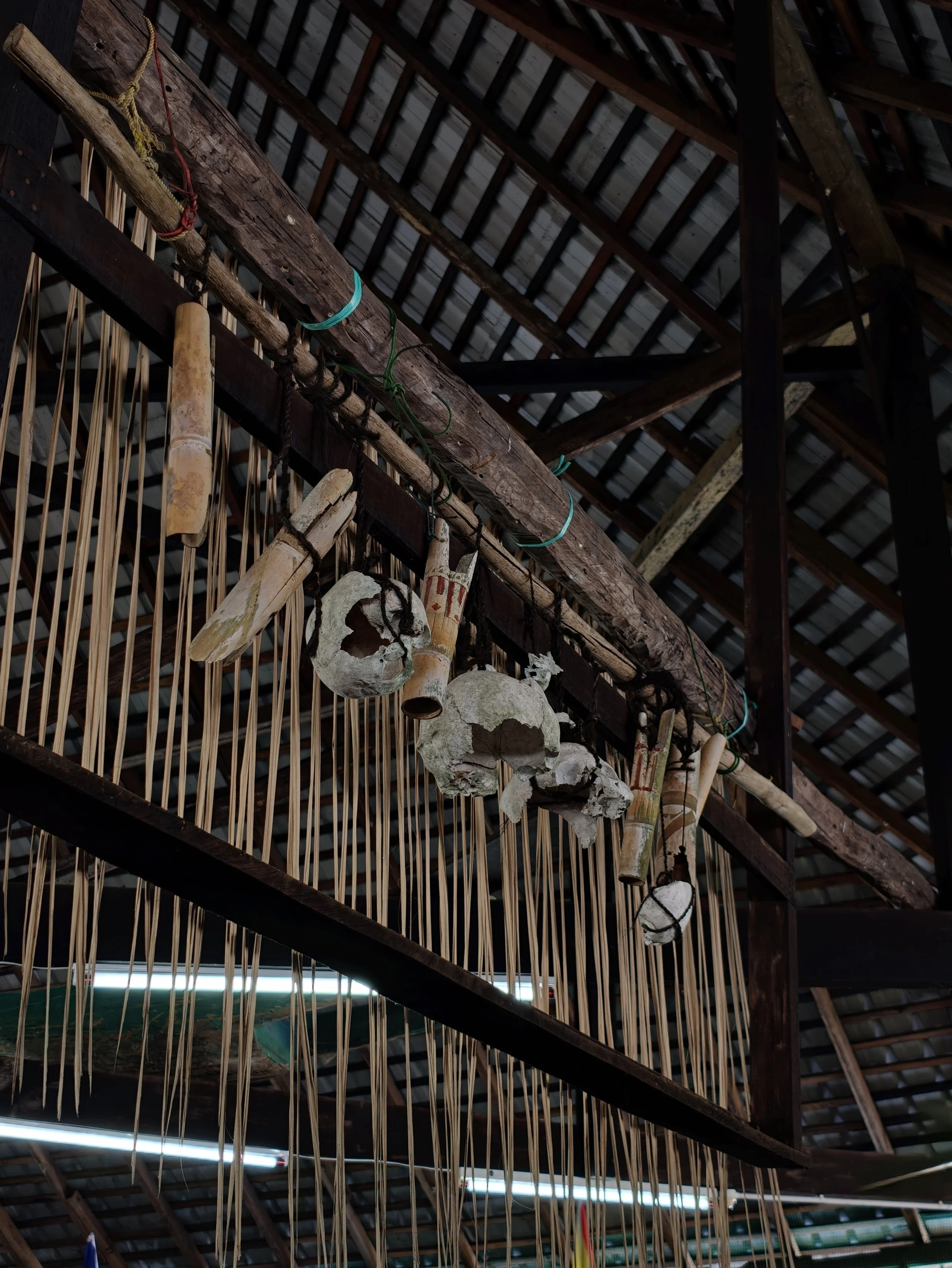
Skulls inside the Panggah at Kampung Benuk kept from the headhunting era before the 1970s. This is part of the village's own history rather than a display for visitors.
Kampung Benuk is about an hour from Kuching, and most visitors treat it as exactly that - a day trip. You come, you see the longhouse, the Panggah (Ritual House), maybe buy a snack, and you leave. I did something slower instead, and stayed the night with a host named Derai.
Derai spent the past 20 years in KL working as a helper for an Australian family, and it shows the moment you walk into her home - walls of photos, stories from her time away, handmade items and collected trinkets over 2 decades in multiple cultures. It also shows up on the dinner table. She cooked us breakfast quesadillas and an olive salad with a lemon honey dressing, of all things! It was the last thing I expected in a Bidayuh village, and one of the best meals of the trip.
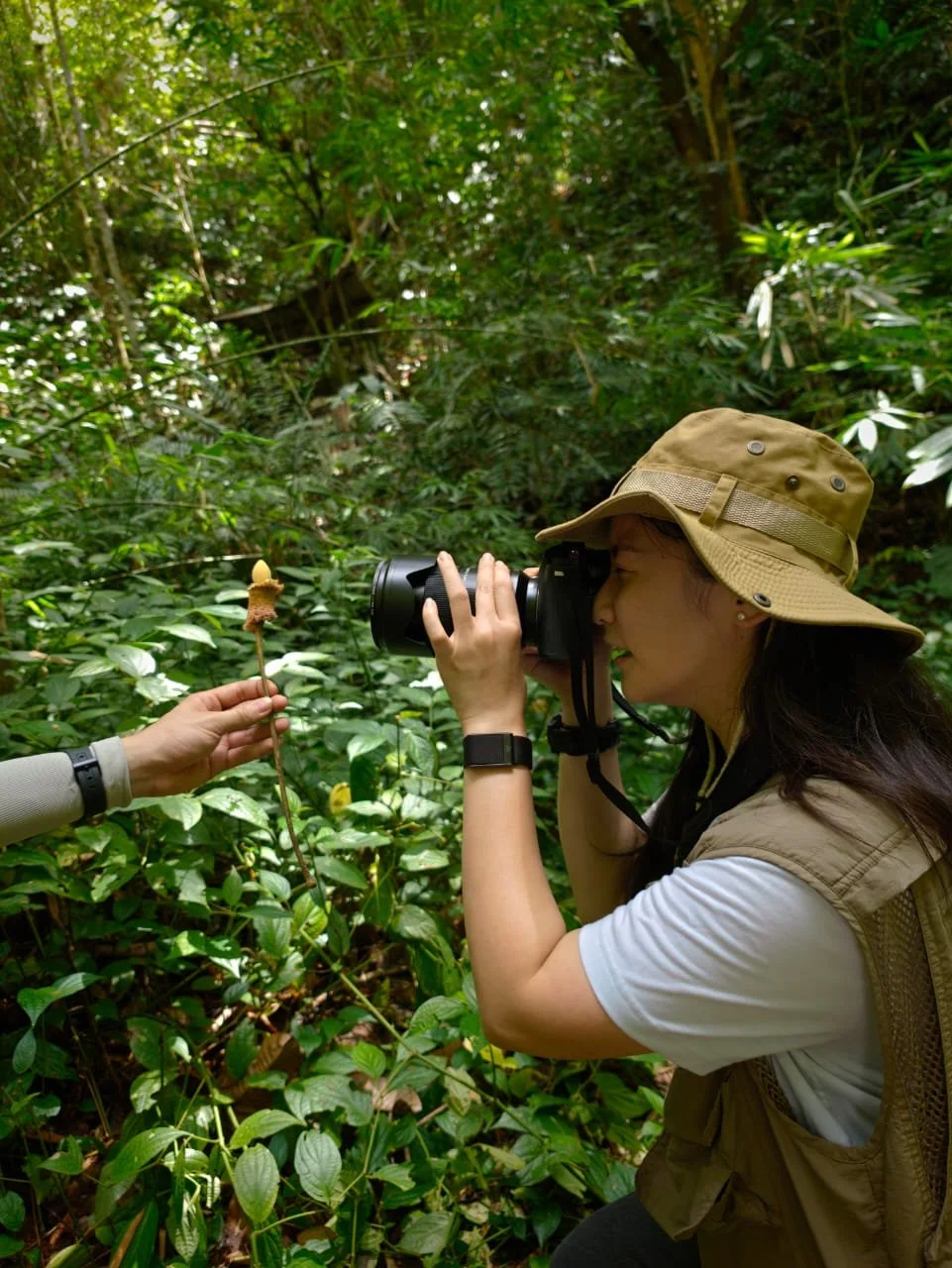
Learning about native plants all along the way, that’s petai (parkia speciosa) flower
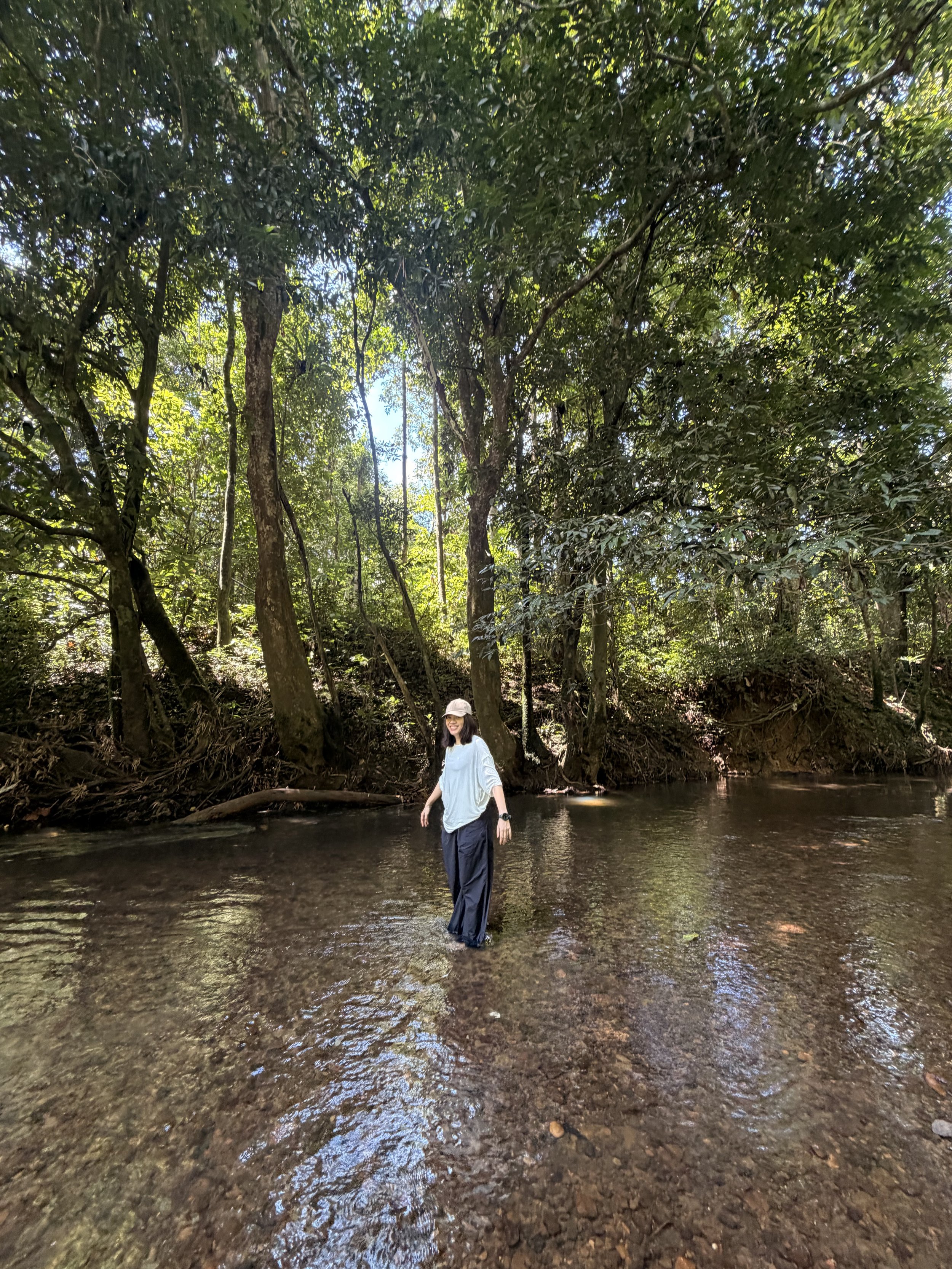
Crossing a river of any kind for a city girl is always fun
The rest of the stay felt unhurried. We hiked out to see fruit trees, cash crops, and trees the community considers important enough to name, crossed a river (super fun). Also harvested bamboo, lemongrass, and herbs along the way for the night's dinner. The villagers showed us how to extract bark and rotan straight from the jungle, and we watched demonstrations on making a tapan, a ragak, and a paku, village skills that don't get performed for a bus of day-trippers, just shown to whoever happens to be staying long enough to ask. So please ask for it as part of arrangement before you go!
It was a Saturday night when we were there, they arranged a cultural performance with gong and drums. The best part? They pulled me into it rather than let me watch from the side. I got to play the gong and picked up their traditional song, and the rest were welcomed to join in the dance. After they rested down the traditional musical instruments, they brought in a karaoke machine and continued to dance and sing until midnight, with tuak (rice wine) passing around!
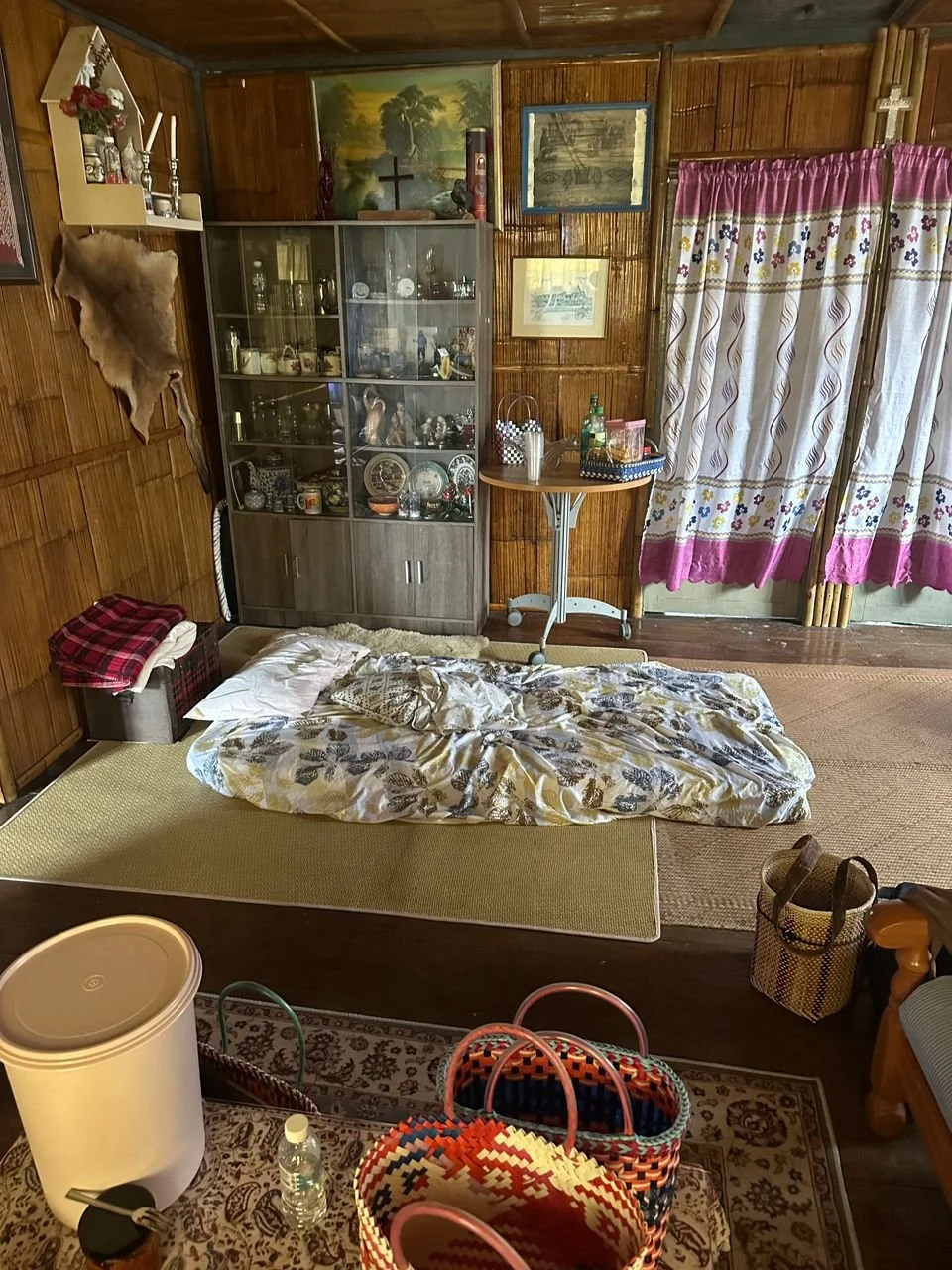
Where I Slept: A mattress in the living room, and I wouldn't have had it any other way. The bathroom was also clean, odorless and spacious - no roughing-it compromises here.
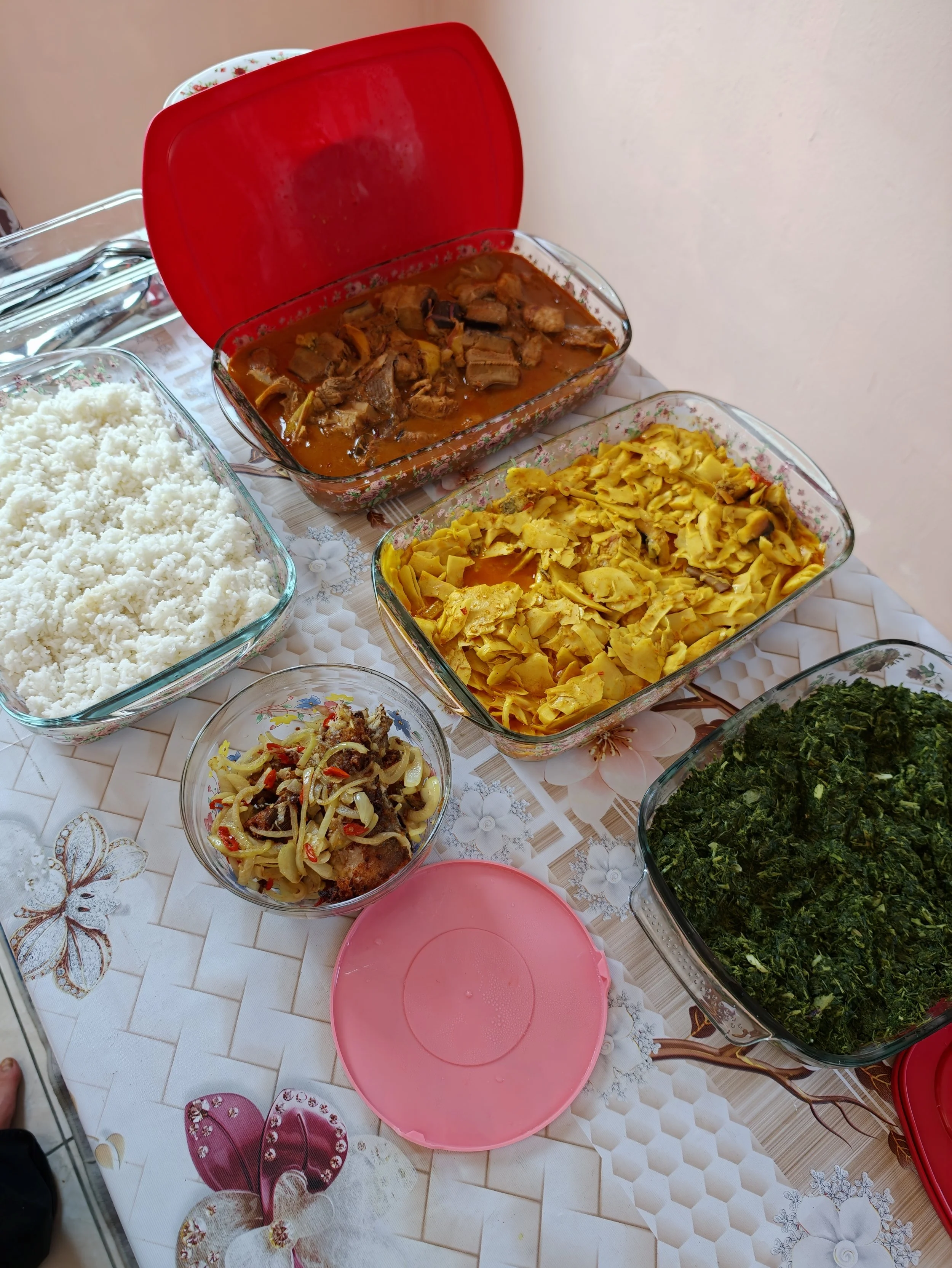
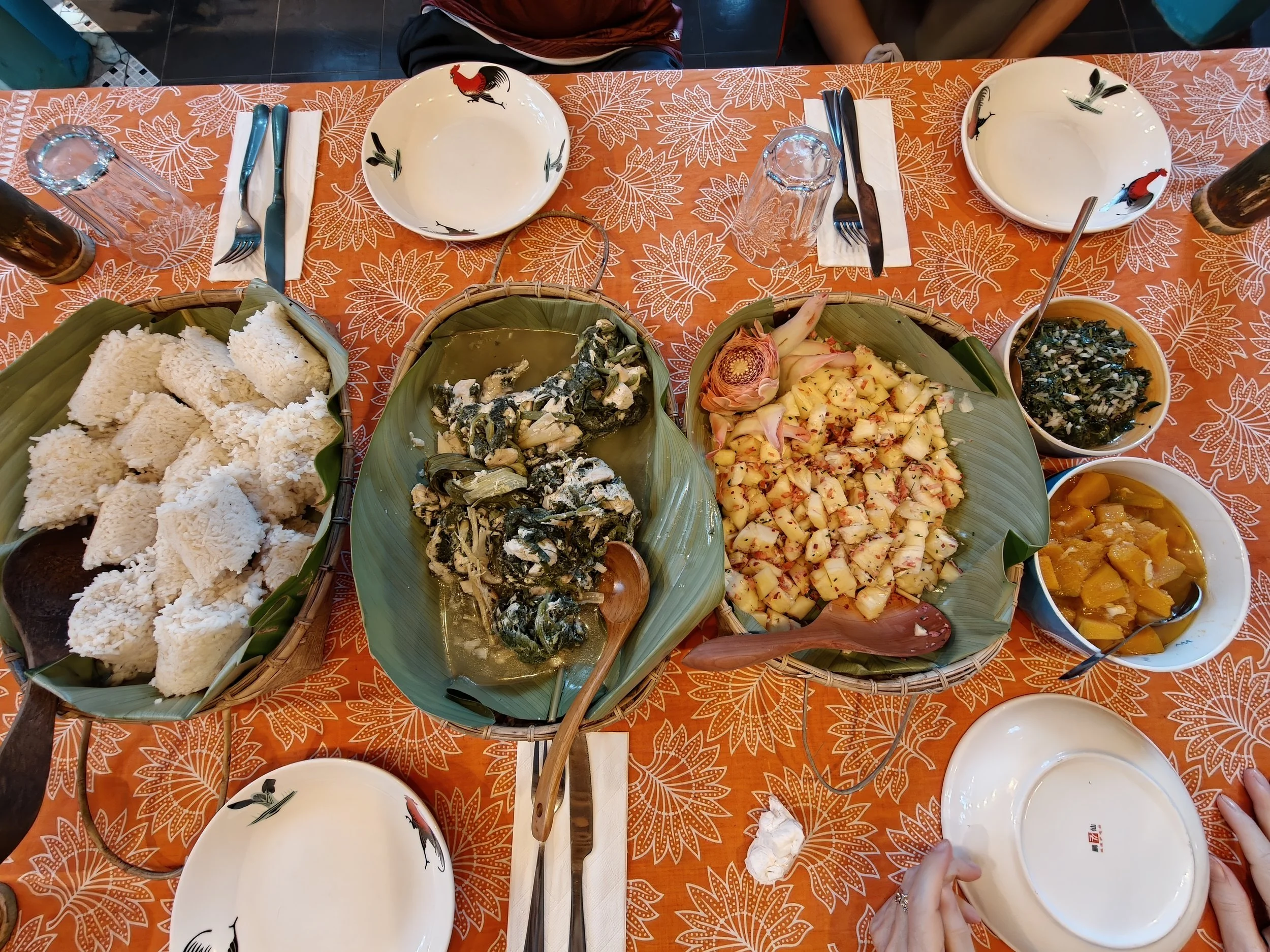
Home-cooked Bidayuh lunch spread with rice, stingray curry, bamboo belacan, kasam (pickled fish) and stir-fry cassava leaves at a village homestay near Kuching
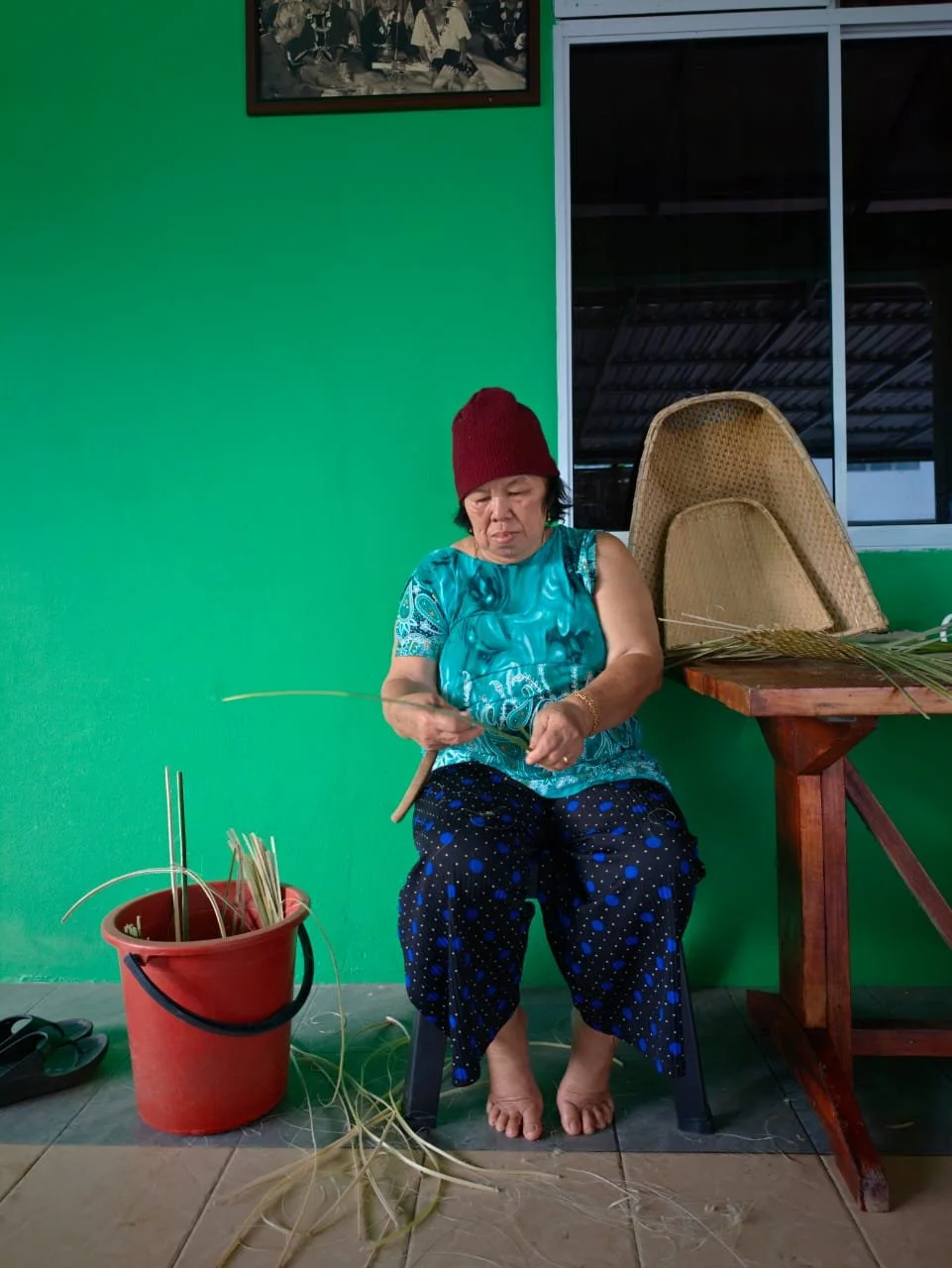
The ketua kampung's mother, weaving with sago leaves the way she's done it her whole life. She can do a basket in just 1 day!
Several villagers there spoke perfect English, which made the oral history land even harder, no gap in translation between me and what they were telling me. They also have 2 houses serving as home caterers, so food outside of meal time isn’t a problem. You can order directly from someone’s kitchen.
A Note on Booking: This one didn't come from a listing. It came from a group contact to Derai. If you want this exact depth of experience, be ready for it to take patience, a local contact, and a willingness to show up without a polished itinerary waiting for you. You may email at hello@disappearingcultures or drop me a DM on Instagram to get the contact.
Stop Two: Saloma's Village Stay, Booked Through Seek Sophie
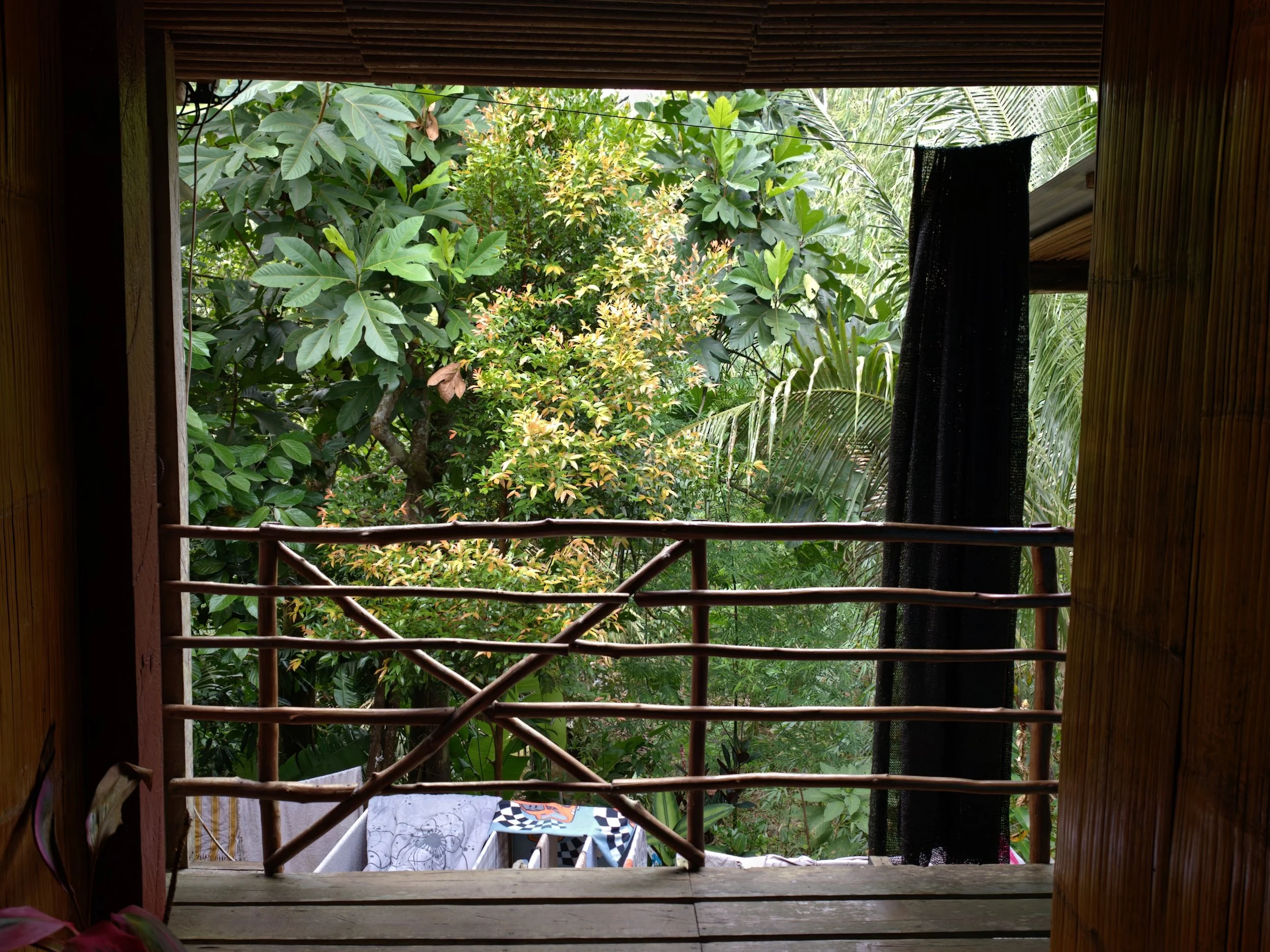
View from bedroom 6 at Saloma’s Village Stay
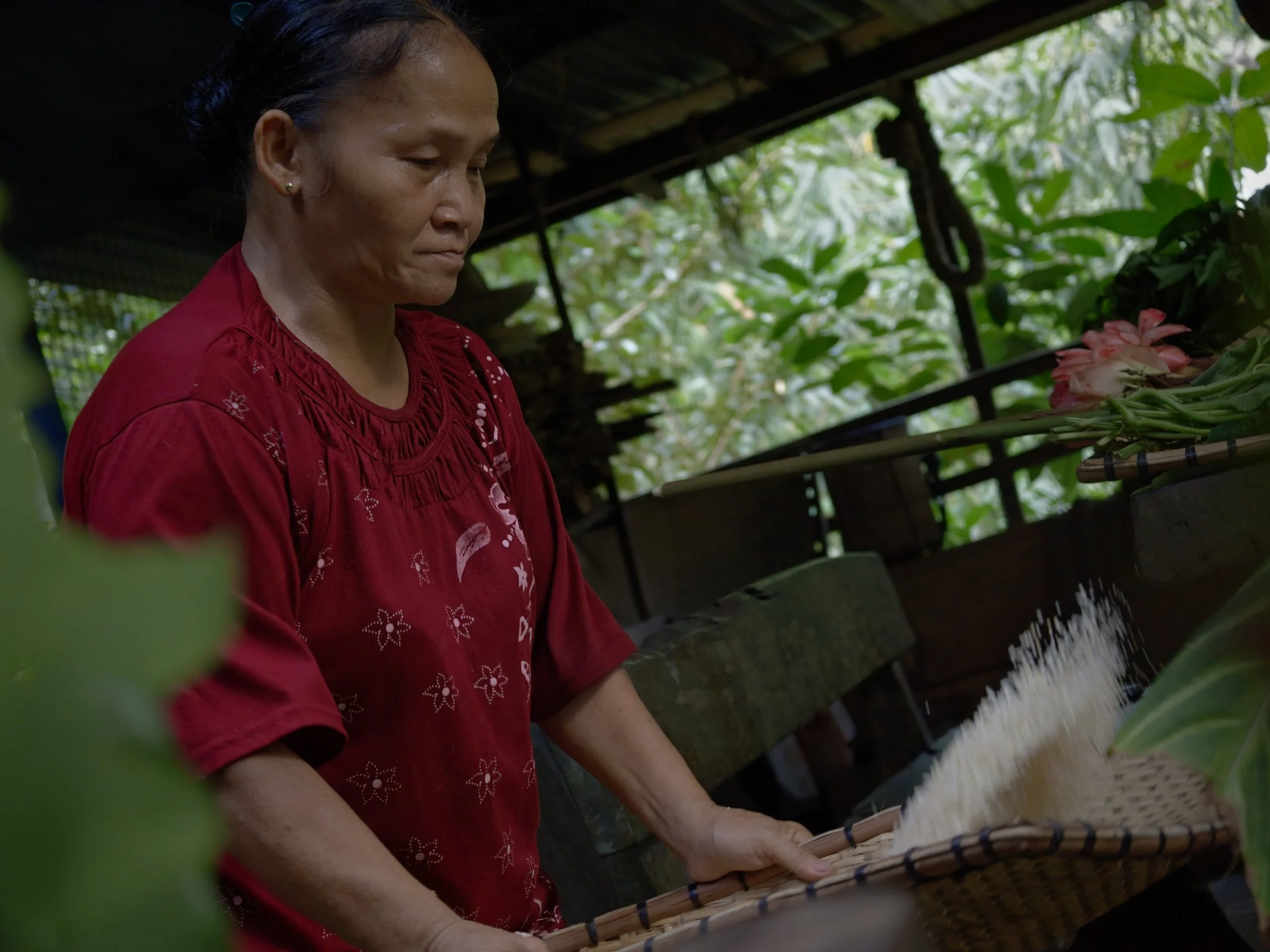
Saie sieving rice using a tapan. After padi (rice) is pounded or milled, the tapan is used to sieve out debris, husk, and empty grains from the good rice.
The second stay was about ninety minutes from Kuching, and this time I brought my mom along. It's Saloma's 2D1N Sarawak Village Stay, a package that bundles Semenggoh's orangutans, a Bidayuh village and longhouse visit, a village school and weaver, and a jungle trek to a waterfall - all with pickup from Kuching included. (This is an affiliate link - booking through it supports the blog at no extra cost to you.)
First, a correction to expectations: Saloma's own accommodation isn't a longhouse. It's much more modern, closer to a guesthouse - an open tree house-style stay with beautiful decor, and mosquito netted beds. You get your own room with shared bathroom (separated shower + toilet, both are super clean and comfortable.) Do note that the itinerary does take you into an actual longhouse as part of the day. That distinction matters if you're going in expecting to sleep inside one.
My honest tip: book 2 nights, not 1. We only stayed the single night (the 2D1N option), and it felt too short, the itinerary can feel rushed trying to fit orangutans, the village, play time with school kids, a night jungle trek into that window. Seek Sophie also runs a 3D2N version; if I did this again, that's the one I'd pick.
For me, the real highlight wasn't the itinerary at all, it was the people working for Saloma. William was our jungle guide, and also, unexpectedly, a pastor, older than me by every measure except energy! Walking the village with him, he handed down an enormous amount of oral tradition about herbs, edible plants, the way you'd only get from someone who's spent a lifetime paying attention, and depending on them for daily consumption.
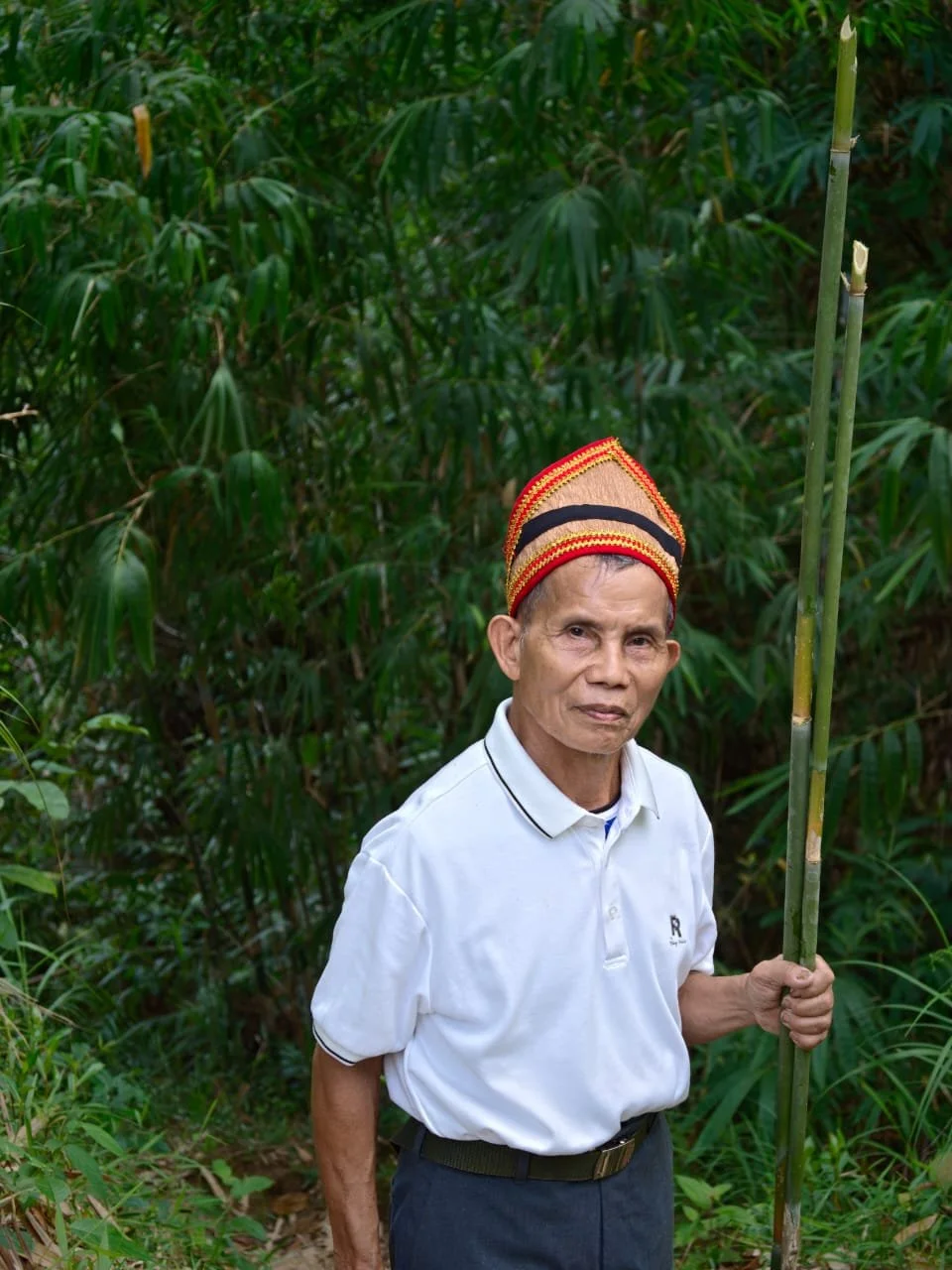
This is William, he has so much knowledge about foraging and hunting in the jungle, all for subsistence. Pure gem of a person!
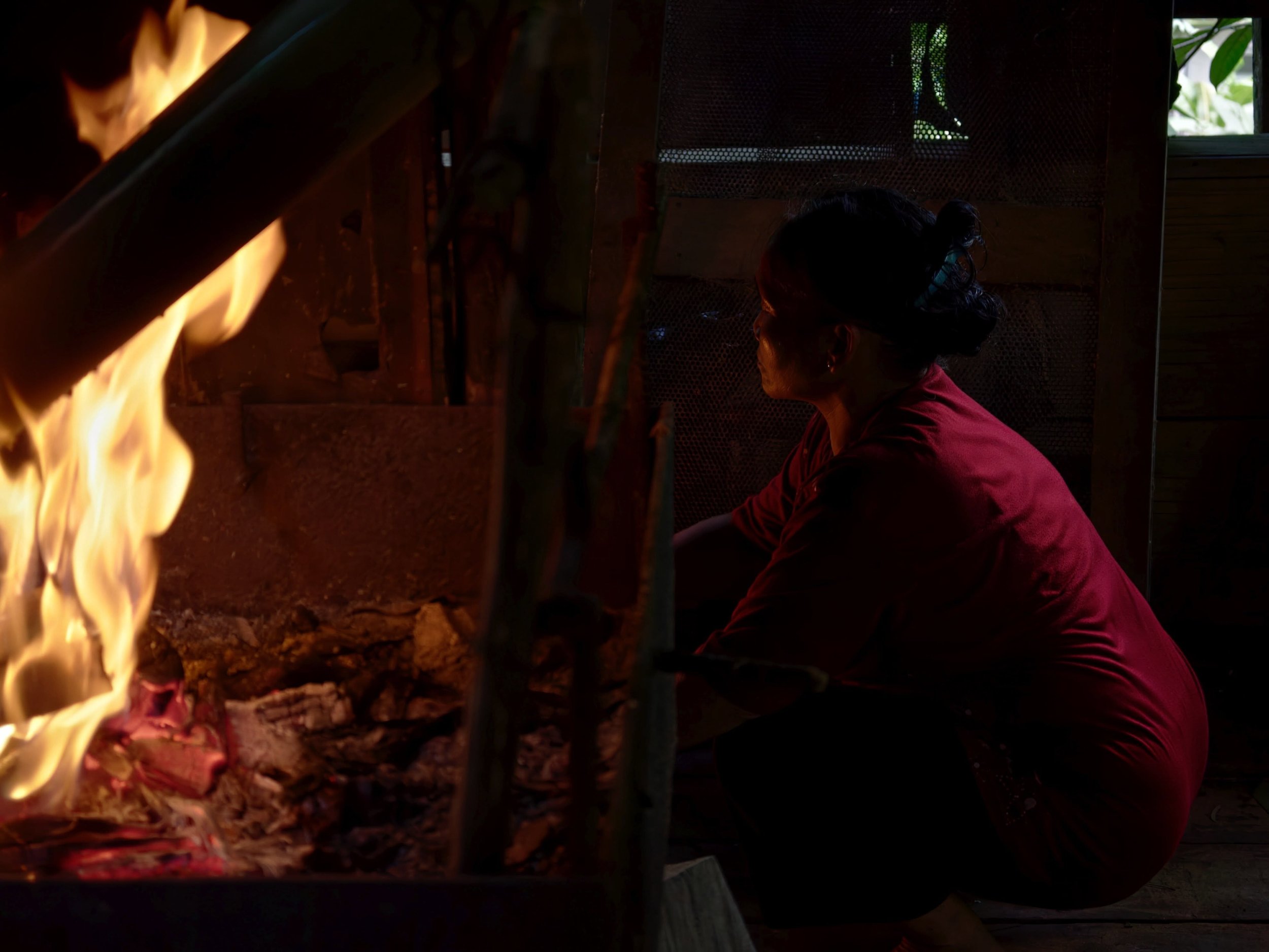
Saie prepping fire to have rice cooked directly in a bamboo tube, no meat, just the rice picking up the smoke and bamboo aroma from the fire. It was so yummy!
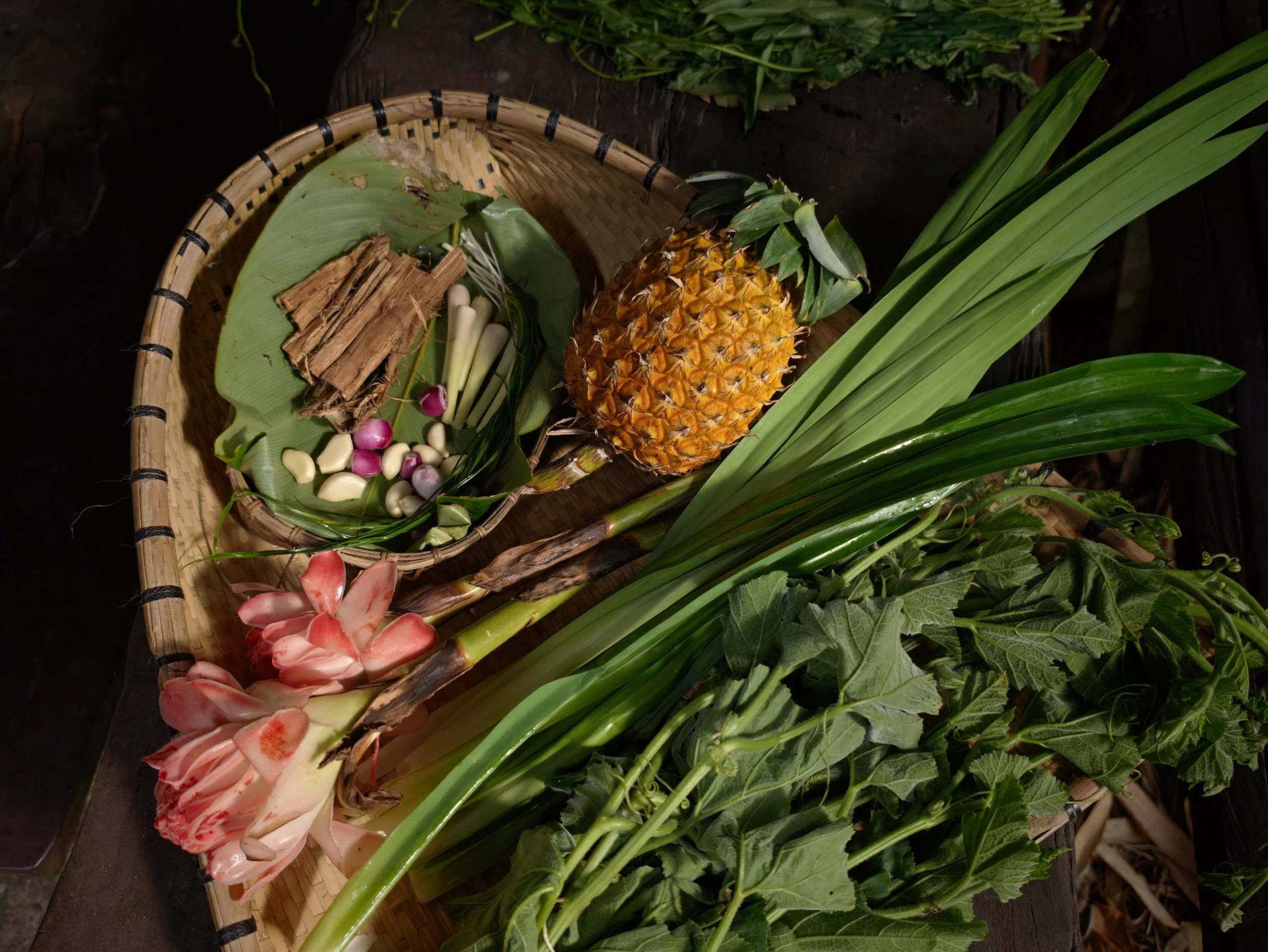
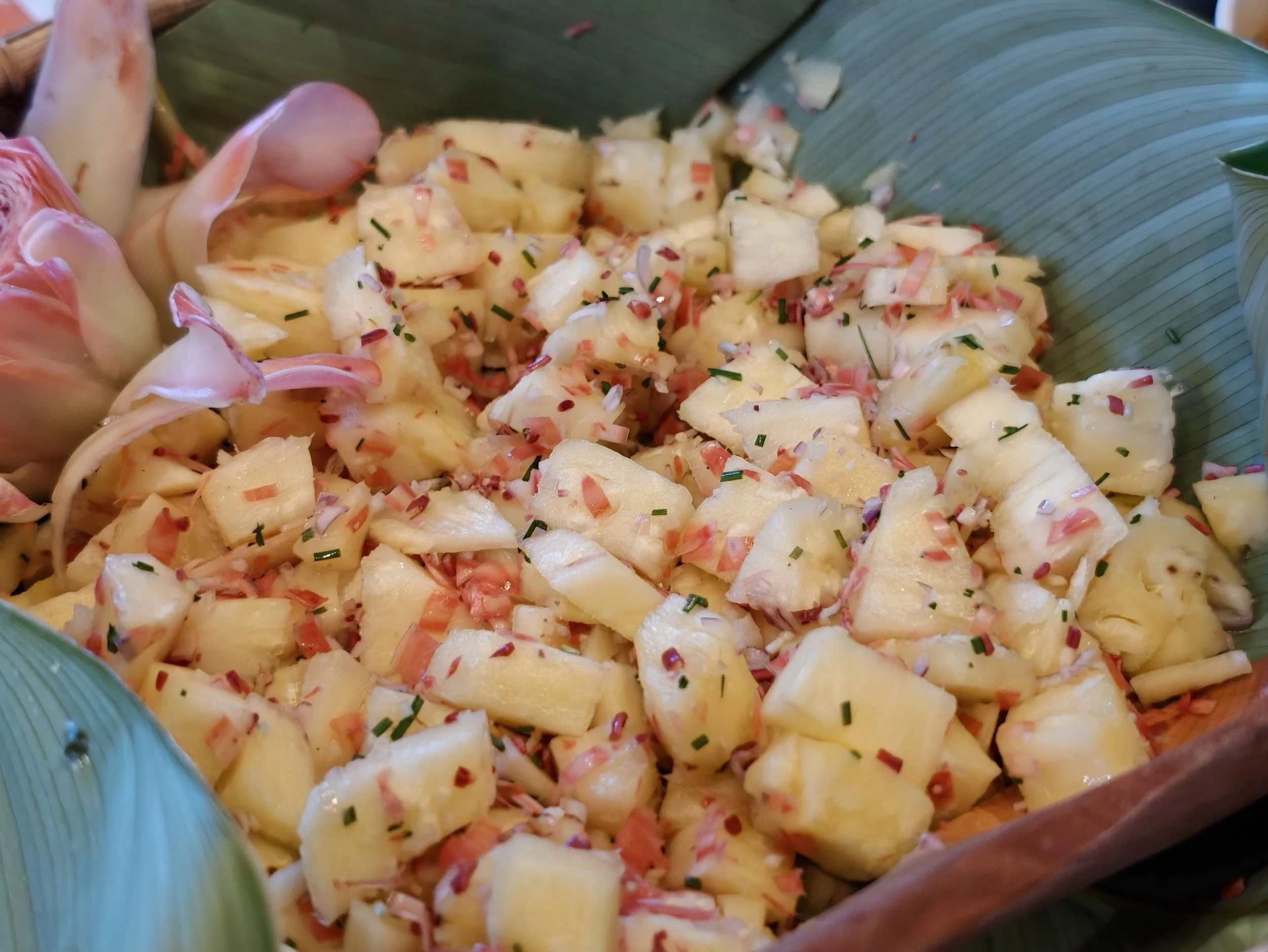
A tapan full of the morning's harvest: lemongrass, bark, shallots and garlic, torch ginger flower, pandan, and pineapple, everything about to go into that night's Bidayuh cooking. Imagine the flavors!
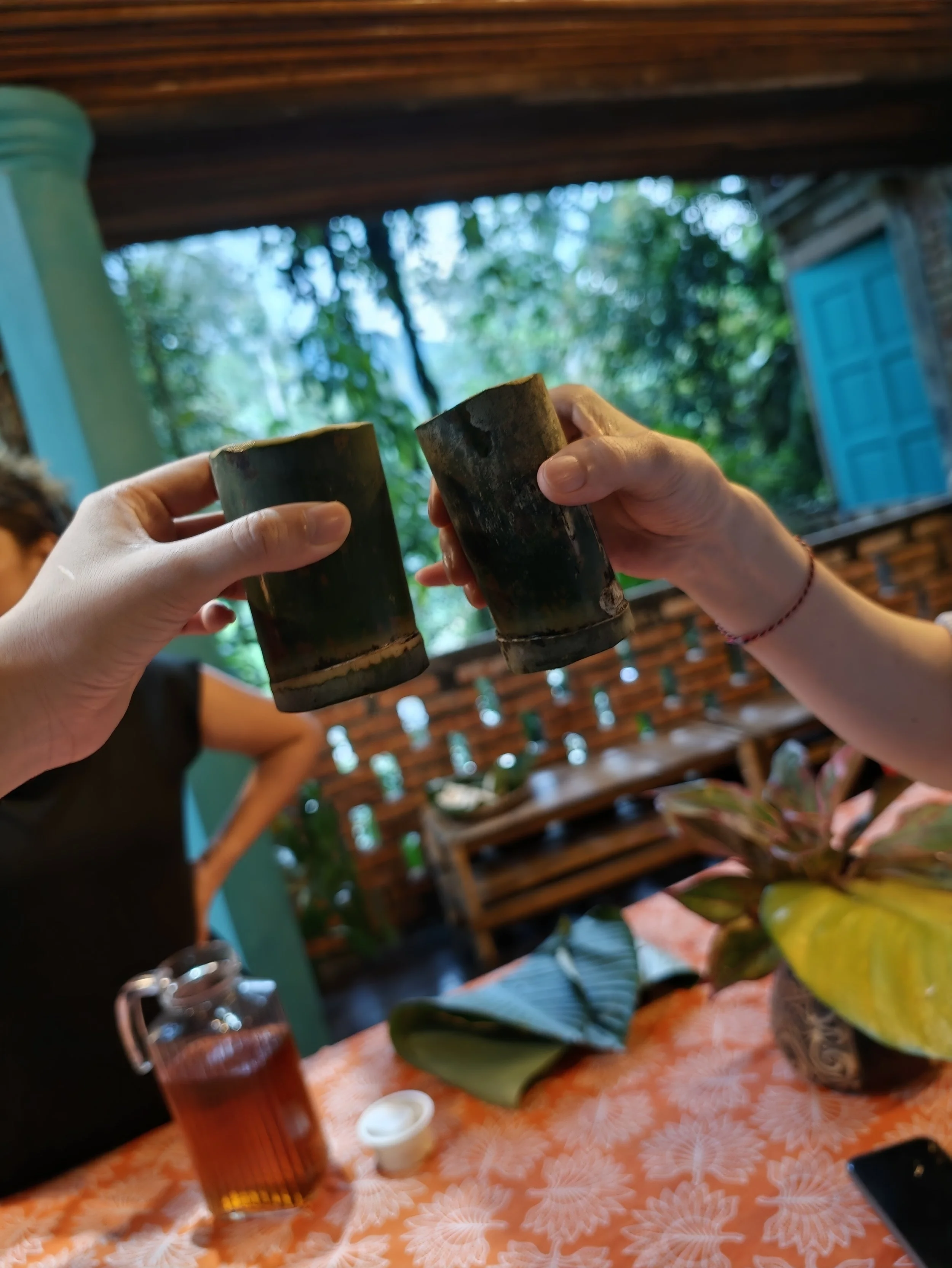
Then there was Saie, another helper, who doesn't speak a word of English and didn't need to. She made us bamboo cups (freshly chopped! ayyy) to drink bamboo tea from, and I watched her start a fire and prep foraged ingredients for dinner with a kind of quiet grit that no itinerary bullet point captures. I'd actually met her earlier that day at the waterfall while she was foraging. She chopped up some young bamboo on the spot, and made me a flute out of it. Boy my jaws dropped! Everyone working there is Bidayuh, you feel their traditions.
One more honest observation: the food was best when it stuck to fully foraged, traditional Bidayuh cooking. When they cooked something adjusted for a Western palate - which happens when there are foreign guests in the group, it stopped working for my Southeast Asian tongue. If you want the real version of the food here, that's worth knowing going in. Perhaps made a note to them too!
Booking Tip: Prices start from around RM875.5 per person for the 2D1N stay; the 3D2N version runs higher but gives you the breathing room the shorter version doesn't. Check current pricing and dates before you book, as these shift. I’ve also met people doing just a day trip and having fun, it’s available on Seek Sophie too.
What I'd Tell a Friend Choosing Between the Two
If you're deciding which one to book, it comes down to what kind of trip you actually want.
Kampung Benuk gave me the slower, everyday version - oral history anytime, a weaving demo, a host whose own life story was as memorable as anything "cultural" on the itinerary. It asks more of you upfront, you need a way in, and patience once you're there but what you get back is unhurried in a way I haven't felt on a trip in a long time. It felt like I was visiting a far relative. You can arrange a Grab to/return to Kampung Benuk.
Saloma's stay asks less of you and gives you more certainty as there’s a set schedule, a well reviewed host (Saloma is almost like a celebrity host by now), orangutans and a waterfall guaranteed on the itinerary. And even inside that structure, the moments I actually remember weren't on the schedule at all: William naming plants on a walk, sharing bits and pieces of his childhood, Saie handing me a flute she'd carved in the 5 minutes since I'd met her. Good people will find a way to make an experience feel personal no matter how many other groups came through before you. You don’t need to arrange your own transportation for Saloma’s.
My advice: if you can only do one, book Saloma's and take the longer version - 2 nights, not 1. If you have the time and a little more tolerance for uncertainty, try to find your way into a homestay like Kampung Benuk too. They're not really comparable trips. One is a well-run tour with heart. The other is closer to being a guest in someone's actual life. I'm glad I did both, and I'd tell you to do both if you can.
My Seek Sophie promote code is “PRESTINE”, you will get $10 off!
